 Image 1 of 1
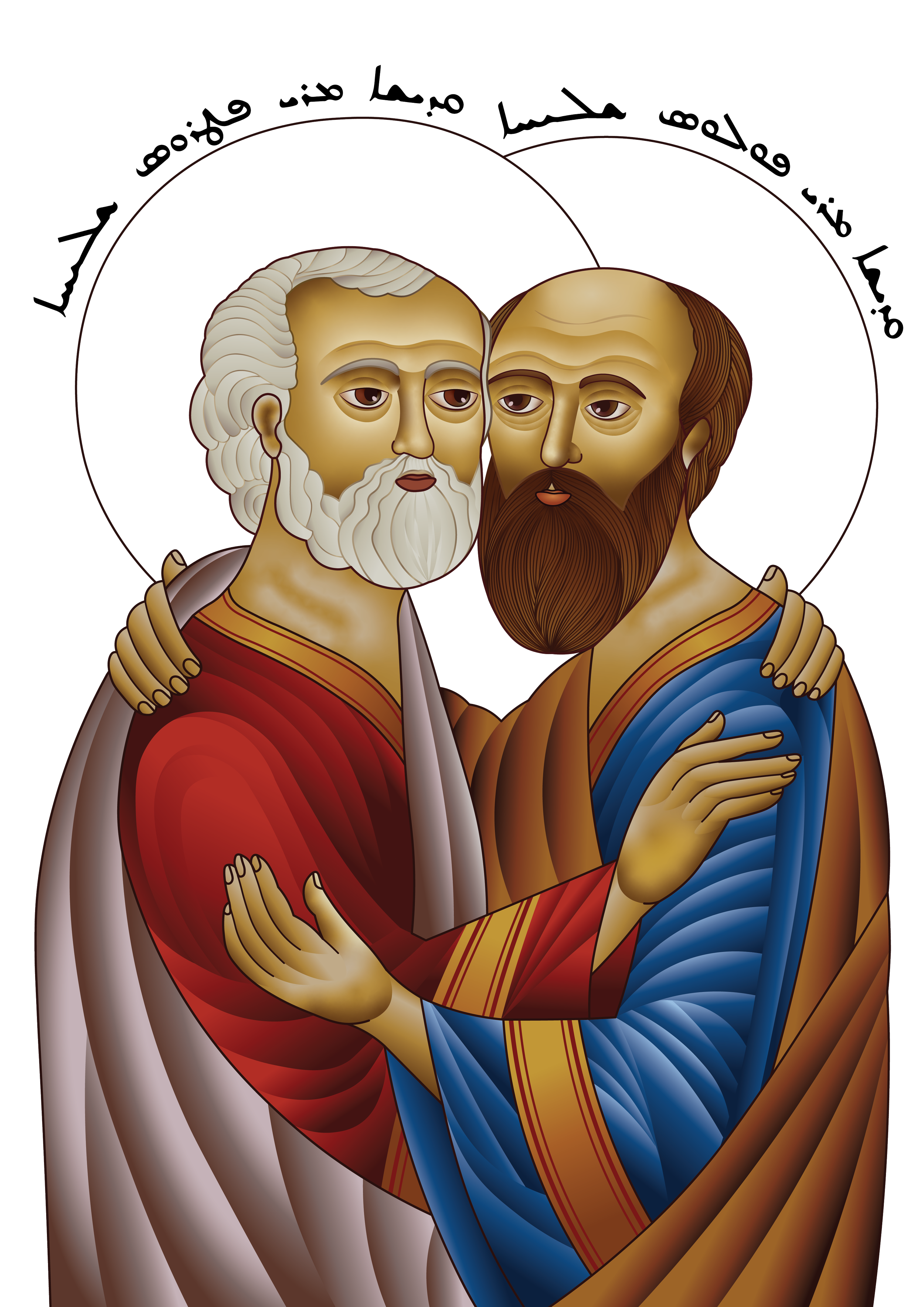
The church of Christ is indeed built on complementarity, not sameness. Saints Peter and Paul, although both central figures in christianity, were quite different humans. Peter is the simple fisherman whose directness becomes a foundation, and Paul is the trained mind who turns intellect into mission. Different temperaments, different stories—one Christ, one Church.
They could disagree, correct each other, and still remain brothers in the same truth and the same calling: the Gospel for Jews and Gentiles, for all nations. Both sealed that unity in Rome through martyrdom. The Church remembers them as two pillars who teach one lesson with one voice: “Love one another as I have loved you” (John 13:34–35).
In Syriac Orthodox tradition, they are mentioned as the founder and the architect of the Church. In every Sunday’s Holy Qurobo, the hymns include the commemoration of ‘the exalted heads of the apostles, St. Peter and St. Paul.
The church of Christ is indeed built on complementarity, not sameness. Saints Peter and Paul, although both central figures in christianity, were quite different humans. Peter is the simple fisherman whose directness becomes a foundation, and Paul is the trained mind who turns intellect into mission. Different temperaments, different stories—one Christ, one Church.
They could disagree, correct each other, and still remain brothers in the same truth and the same calling: the Gospel for Jews and Gentiles, for all nations. Both sealed that unity in Rome through martyrdom. The Church remembers them as two pillars who teach one lesson with one voice: “Love one another as I have loved you” (John 13:34–35).
In Syriac Orthodox tradition, they are mentioned as the founder and the architect of the Church. In every Sunday’s Holy Qurobo, the hymns include the commemoration of ‘the exalted heads of the apostles, St. Peter and St. Paul.